The appointment ends, the screen closes, and then what?
For patients, this part of a telehealth appointment can sometimes feel unclear. You had your conversation with the provider, discussed your concerns, and maybe received a treatment plan. But what happens next?
According to the American Medical Association, telehealth can support follow-up care, prescription management and lab-result discussions when an in-person examination isn’t necessary. The AMA also recommends that telehealth workflows include follow-up care, prescription orders and scheduling the patient’s next appointment.
A good telehealth experience shouldn’t stop when the video call ends.
The follow-up, documentation, prescriptions, test orders, and next appointment are all part of the care that happens afterward.
Here’s what that process can look like.
Your Provider Documents the Visit
Once the consultation is over, the provider still has work to do.
The discussion needs to be documented in the patient’s medical record. This can include symptoms discussed, relevant findings, treatment decisions, medications, and recommendations.
This documentation becomes important for future appointments because it gives the provider a record of what was discussed and what was decided.
For healthcare organizations, having documentation connected directly to the rest of the system can make this process much easier.
Your Treatment Plan Is Put Into Action
Maybe you were asked to start a medication.
Maybe you need to make changes to your routine.
Maybe your provider recommended additional testing.
The next step depends entirely on what was discussed during the appointment.
This is where telehealth care becomes more than simply having a conversation online. The value comes from being able to turn that conversation into an actual care plan.
Prescriptions and Orders May Follow
If your provider determines that medication is appropriate, a prescription may be sent after the appointment.
You may also need lab work, imaging, or another type of diagnostic test.
Depending on the healthcare organization and the type of care being provided, these orders can be handled as part of the same digital workflow.
That means you don’t necessarily have to start from scratch after the appointment ends.
You May Receive Follow-Up Instructions
Your provider may tell you what to watch for, when to check back, or what you should do if your symptoms change.
These instructions are easy to forget when you’re trying to remember everything discussed during the appointment.
Having them documented and accessible afterward can make a difference.
It gives you something to refer back to instead of relying entirely on memory.
Your Next Appointment May Already Be Part of the Plan
Some types of care require regular monitoring.
You may need another appointment in a few weeks. Or perhaps your provider wants to review your lab results before deciding what comes next.
This is where a telehealth follow up can be useful.
If another physical examination isn’t necessary, the next conversation may be handled virtually again.
That saves the patient another trip to the clinic while still keeping the provider involved in their care.
What Happens If Something Changes?
Healthcare doesn’t always follow a neat schedule.
You might develop a new symptom. Your medication may not feel right. Your test results may require another conversation.
In those situations, patients need a clear way to reconnect with their healthcare provider.
A well-designed virtual healthcare system can make communication and follow-up easier, rather than leaving the patient wondering who to contact or where to go next.
The Technology Behind the Follow-Up Matters
This is the part patients don’t always see.
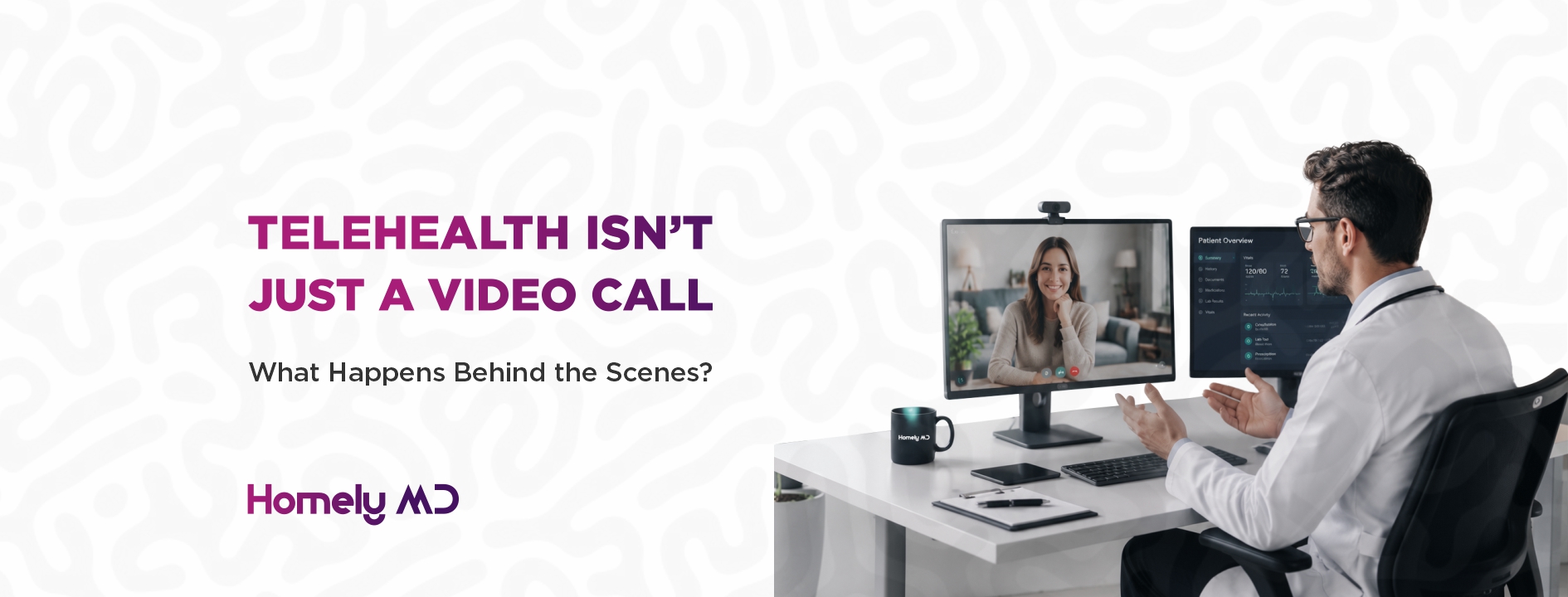
A telehealth appointment may look like a simple video conversation, but there can be several connected workflows happening behind the scenes.
The provider may need to:
- Update the patient’s EHR
- Complete documentation
- Send prescriptions
- Order labs
- Update the treatment plan
- Schedule a follow-up
- Handle billing
- Communicate additional instructions
If every one of these tasks happens in a different system, the process can become unnecessarily complicated.
An integrated healthcare platform can connect these steps so that the appointment doesn’t exist separately from the rest of the patient’s care.
Telehealth Shouldn’t End When the Call Does
The real measure of good telehealth care isn’t simply whether the video worked.
It’s what happens afterward.
Did the patient understand the plan?
Were the necessary orders completed?
Was the visit documented?
Can the provider easily access the information at the next appointment?
Can the patient reconnect with the care team when needed?
Those are the things that turn a virtual appointment into an actual care experience.
How Homely MD Connects the Pieces
Homely MD is built around the idea that healthcare shouldn’t require providers to piece together multiple disconnected systems.
Its healthcare operating system brings together EHR, scheduling, telehealth, documentation, patient communication, billing, and other operational workflows.
That means a telehealth follow up can remain connected to the patient’s broader record and care plan.
The appointment happens virtually.
The information is documented.
The next step is clear.
And the care continues.
Because healthcare doesn’t stop when you close the laptop.
Get in touch!
FAQs
1. What happens after a telehealth appointment?
Your provider may document the visit, send prescriptions or test orders, provide follow-up instructions, and schedule another appointment if needed.
2. Do I always need a telehealth follow up?
Not necessarily. It depends on your condition, treatment plan, and what your provider recommends.
3. Can prescriptions be sent after a virtual appointment?
In appropriate situations, a provider may send a prescription electronically after evaluating your needs.
4. Can my next appointment also be virtual?
Yes, if the follow-up can be safely handled remotely and your provider determines that an in-person examination isn’t necessary.
5. What if I have new symptoms after my telehealth appointment?
Contact your healthcare provider and explain what’s changed. They can determine whether you need another virtual consultation, an in-person appointment, or more urgent care.