Healthcare was never supposed to feel this difficult.
But for a lot of people, it started becoming exhausting long before they even met the doctor.
You leave work early.
You sit in traffic.
You wait another 40 minutes after arriving.
Then suddenly, a 15-minute consultation takes half your day.
People got used to that system because there was no alternative.
Now there is.
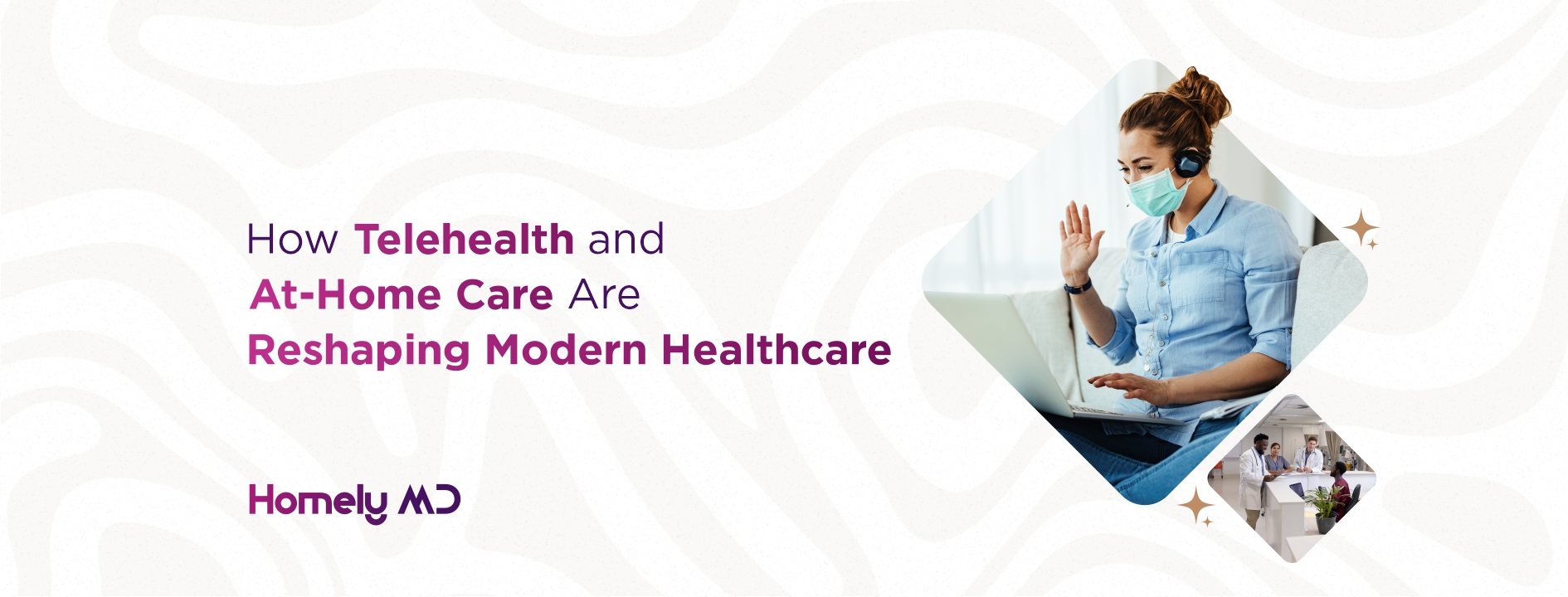
This is exactly why telehealth and at-home care are growing so fast inside modern healthcare.
Not because people suddenly became “obsessed with digital.”
People are simply tired of wasting time for basic healthcare access.
What Is Telehealth?
Telehealth is healthcare delivered remotely using digital technology.
That can include:
- Virtual doctor consultations
- Prescription support
- Follow-up appointments
- Patient communication
- Health monitoring
Most people still imagine awkward video calls when they hear the word telehealth.
That is not really the full picture anymore.
Today, telehealth is becoming part of a larger healthcare experience where patients can communicate, book appointments, receive updates, and manage care far more easily.
Simple takeaway: telehealth removes unnecessary steps between patients and healthcare providers.
What Is an At-Home Healthcare Platform?
An at-home healthcare platform helps patients access healthcare support without depending completely on physical clinics.
Instead of forcing every interaction into a waiting room, parts of the healthcare experience can happen from home.
That includes things like:
- Virtual consultations
- Follow-up communication
- Remote support
- Digital appointment systems
- Home-based healthcare services
And honestly, this is where modern healthcare started changing in a noticeable way.
People realised healthcare could feel easier.
Not rushed.
Not chaotic.
Just… smoother.
Why People Started Preferring At-Home Care
Convenience matters more than healthcare systems expected.
A parent with two children does not want unnecessary clinic visits.
A working professional does not want to block half the day for one appointment.
An elderly patient may struggle with travel entirely.
These small frustrations add up over time.
Most patients are not avoiding healthcare itself.
They are avoiding the process around it.
That difference matters.
Telehealth Became Popular for One Big Reason
It fits into real life better.
That is it.
People already handle work meetings, banking, shopping, and communication digitally.
Healthcare moving in the same direction was almost inevitable.
According to Deloitte’s Global Health Care Outlook, digital healthcare adoption continues growing because patients increasingly expect accessible and connected care experiences.
And once people experience smoother healthcare access once, they rarely want to go backwards.
What Patients Actually Care About
Not everyone wants “premium healthcare experiences.”
Most people just want healthcare that feels manageable.
Usually that means:
| What Patients Dislike | What They Prefer Instead |
| Long waiting rooms | Faster appointments |
| Repeated paperwork | Simpler systems |
| Delayed communication | Quick responses |
| Travel stress | Remote access |
| Difficult scheduling | Flexible booking |
That shift is reshaping modern healthcare quietly but very quickly.
How At-Home Healthcare Changes Behavior
This part gets overlooked a lot.
When healthcare becomes easier to access, people become more consistent with it.
They follow up faster.
They communicate more.
They delay appointments less often.
Most people do not notice this at first.
But easier systems usually improve long-term patient engagement naturally.
Not through pressure.
Through convenience.
In simple terms: people are more likely to prioritise healthcare when it fits into their lives properly.
Why Providers Are Adapting Too
The pressure is not only on patients.
Healthcare providers are also trying to manage overloaded systems, scheduling problems, and communication delays.
Older systems often create operational bottlenecks behind the scenes.
| Traditional Challenges | Digital Care Advantages |
| Overbooked schedules | Flexible appointment flow |
| Slower follow-ups | Faster patient communication |
| High clinic dependency | Remote care accessibility |
| Manual coordination | Better digital organization |
| Limited patient reach | Wider accessibility |
This is one reason telehealth infrastructure is growing so quickly now.
Providers are realizing smoother systems help everyone involved.
Telehealth Feels More Human Than People Expected
A lot of people assumed digital healthcare would feel impersonal.
Ironically, some patients feel more supported now.
Not because technology replaced care.
Because communication became easier.
Quick check-ins.
Faster replies.
Less delay between conversations.
That consistency changes how patients experience healthcare emotionally, too.
It starts feeling less intimidating.
Modern Healthcare Is Becoming Hybrid
Traditional healthcare is not disappearing.
Hospitals, diagnostics, emergency care, and physical examinations will always matter.
But modern healthcare is clearly moving toward hybrid care systems.
Part digital.
Part physical.
That balance gives patients more flexibility without removing professional medical support.
| Traditional Healthcare | Hybrid Modern Healthcare |
| Fixed clinic visits | Flexible care access |
| Travel-heavy process | Remote support options |
| Delayed communication | Faster digital interaction |
| Reactive appointments | Ongoing patient engagement |
| Rigid systems | More adaptable care experience |
The goal is not to replace doctors.
The goal is to remove unnecessary friction around access.
Why Convenience Is Becoming Part of Healthcare Quality
People no longer separate “good healthcare” from “convenient healthcare.”
They expect both together now.
And honestly, that expectation makes sense.
Healthcare already feels stressful enough for most people.
The process around it should not make things harder.
This is one reason at-home healthcare platforms are expanding so quickly across modern healthcare systems.
Patients are choosing accessibility more intentionally now.
The Future of Healthcare Access
Healthcare is becoming more connected to how people actually live day to day.
Telehealth and at-home care are helping patients access support in ways that feel faster, calmer, and easier to maintain long term.
The shift is bigger than technology.
It is changing what people expect from healthcare completely.
People want healthcare experiences that respect their time, routines, responsibilities, and everyday lives.
And honestly, they probably should.
At Homely MD, the focus is on making healthcare feel more accessible, flexible, and easier to manage through telehealth and at-home care support.
Book a discovery call at Homely MD to explore smarter healthcare solutions designed around modern lifestyles.
FAQs
1. Are patients actually preferring telehealth now over clinic visits?
For smaller consultations and follow-ups, honestly yes. A lot of patients simply prefer something quicker and easier now.
2. Why are at-home healthcare platforms growing this fast lately?
Because people are tired of adjusting their entire schedule around one appointment. Convenience matters more than most systems expected.
3. Do providers really benefit from telehealth operationally?
Usually they do. Communication becomes smoother, follow-ups happen faster, and scheduling feels less chaotic overall.
4. Are people comfortable opening up during virtual consultations?
Surprisingly, many are. Some patients actually feel more relaxed speaking from home instead of sitting inside a clinic.
5. Is modern healthcare slowly moving toward hybrid care models?
It definitely looks that way. Most healthcare systems are trying to balance digital convenience with traditional in-person care now.