Not every follow-up appointment needs to happen in a clinic.
Sometimes, the hard part of healthcare isn’t the appointment itself. It’s everything around it. Taking time off work, driving to the clinic, finding parking, waiting to be seen, and then driving home for an appointment that may only involve a conversation with your provider.
For many follow-ups, there is another option.
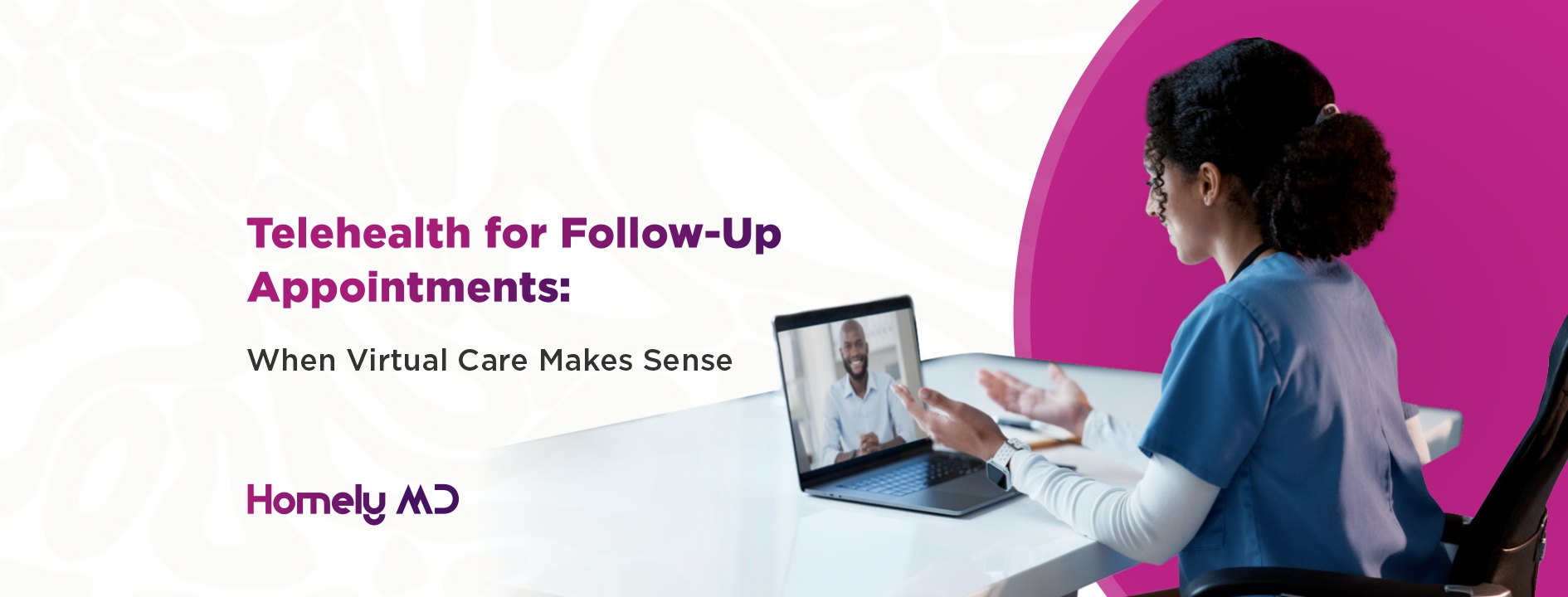
A telehealth follow up can make sense when the next step in care is mainly about checking progress, discussing results, answering questions, or adjusting an existing treatment plan.
The important part is knowing when virtual care is actually appropriate.
What Is a Telehealth Follow-Up?
A telehealth follow-up is a remote appointment between a patient and healthcare provider after an initial consultation or treatment.
The appointment might involve:
- Reviewing lab or test results
- Discussing how a treatment is working
- Checking symptoms
- Talking about medication side effects
- Adjusting an existing care plan
- Answering questions
- Deciding whether another appointment or test is needed
It isn’t meant to replace every in-person visit.
It simply gives providers another way to deliver care when a physical examination isn’t necessary.
When Does a Follow-Up Make Sense Virtually?
This is where virtual healthcare can be genuinely useful.
Imagine you’ve already had your initial appointment. Your provider knows your medical history, you’ve completed the recommended tests, and now you simply need to discuss the results.
Do you really need to make another trip to the clinic?
In many cases, not necessarily.
A virtual appointment can give you dedicated time with your provider without adding the travel and waiting that comes with an office visit.
1. Reviewing Test Results
You’ve had the bloodwork done. Now you want to know what it means.
A follow-up can give your provider the opportunity to explain the results, put them into context, and discuss what happens next.
For patients, this can be much easier than trying to understand a report on their own.
For providers, having the patient’s records and results available during the telehealth consultation makes the conversation more useful.
2. Checking on a New Treatment
Starting a treatment doesn’t mean the conversation ends after the prescription or initial plan.
A follow-up may be needed to see how you’re responding.
Is it helping?
Are there side effects?
Do symptoms feel different?
Does the treatment need to be continued or adjusted?
When the discussion doesn’t require a physical examination, a telehealth follow up can be a practical way to stay connected.
3. Managing Ongoing Care
Patients with ongoing healthcare needs may require regular check-ins.
Not every check-in needs to involve a full office visit.
Depending on the patient’s situation and the provider’s clinical judgment, virtual appointments can be used to monitor progress, discuss symptoms, review information, and determine the next step.
That can make ongoing care less disruptive for both patients and providers.
4. Answering Questions After an Appointment
Sometimes the reason for a follow-up is simple.
You remembered something you forgot to ask.
You’re unsure about part of your treatment plan.
You want clarification about a test result.
You want to know when you should come back.
These conversations are still healthcare. They just don’t always require a physical examination.
A telehealth consultation gives providers a way to handle appropriate follow-up conversations without automatically turning every interaction into an office visit.
When Virtual Care May Not Be Enough
Convenience shouldn’t come at the expense of clinical judgment.
There are situations where an in-person appointment is more appropriate.
For example, a provider may need to:
- Perform a physical examination
- Take certain measurements
- Conduct a procedure
- Evaluate a new or worsening physical symptom
- Perform diagnostic testing
- Provide hands-on treatment
The right question isn’t, “Can this appointment be done online?”
It’s, “Can this particular healthcare need be safely and effectively addressed online?”
That’s a much better way to think about virtual healthcare.
The Technology Behind a Better Follow-Up
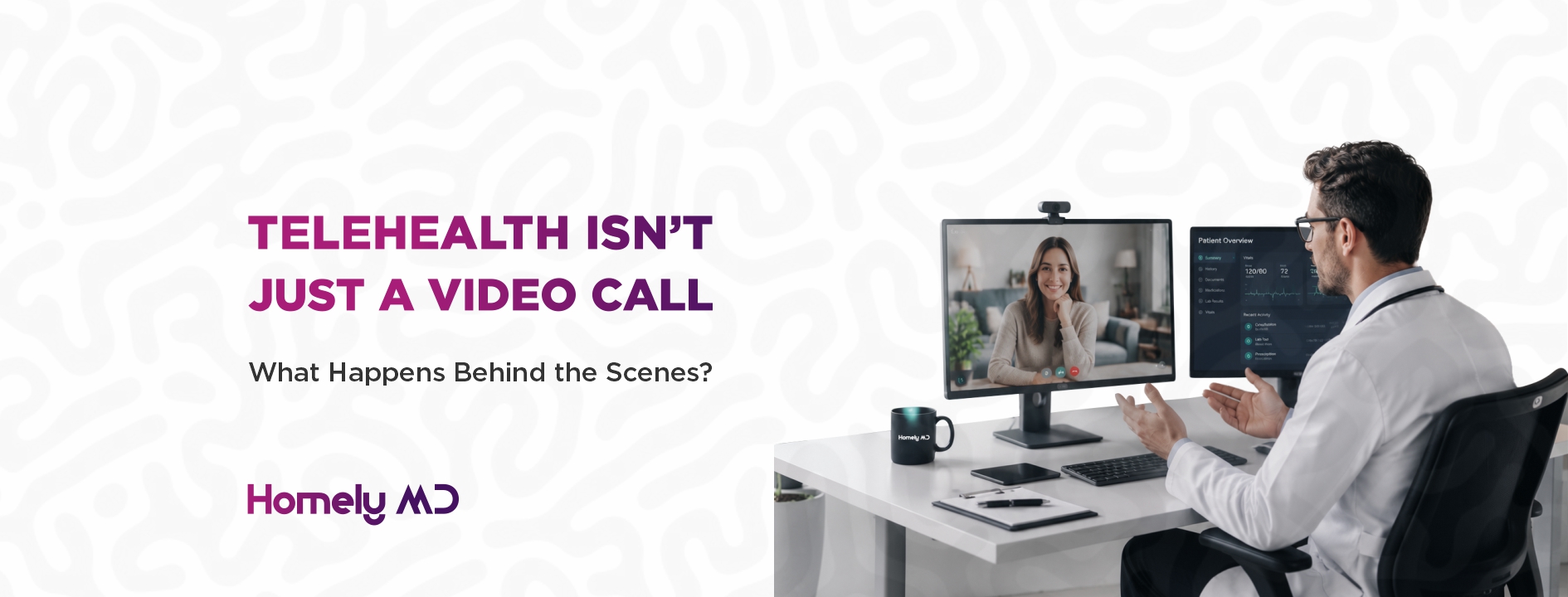
A telehealth appointment is more than a video window.
For the patient, it may feel like a simple conversation. Behind that conversation, however, there is a lot happening.
The provider may need access to:
- Patient records
- Previous consultation notes
- Lab results
- Appointment history
- Treatment information
- Billing details
- Follow-up instructions
When these systems operate separately, even a 15-minute appointment can create unnecessary administrative work.
This is why an integrated telehealth platform can matter.
The goal isn’t simply to put a doctor on a screen. It’s to connect the virtual appointment with the rest of the patient’s care.
Why Telehealth Is Becoming Part of Routine Care
Telehealth has moved well beyond being a temporary solution for situations where patients couldn’t physically visit a clinic.
According to the American Medical Association, 71.4% of physicians reported using telehealth in 2024, compared with 25.1% in 2018.
That doesn’t mean every appointment should become virtual.
It means providers now have another tool for delivering appropriate care.
The challenge is using that tool intelligently.
How Homely MD Supports Telehealth Follow-Ups
Homely MD brings telehealth into a broader healthcare operating system.
Instead of treating a telehealth consultation as a separate video call, providers can manage virtual care alongside their EHR, scheduling, documentation, patient communication, billing, and other operational workflows.
That creates a more connected experience.
A patient books a follow-up.
The provider has access to the relevant records.
The consultation happens virtually.
The care plan can be documented.
The next step can be scheduled.
The appointment doesn’t have to exist in isolation from everything else happening in the practice.
And that’s really where telehealth becomes useful.
Not because a video call is revolutionary, but because the right care can sometimes happen without asking the patient to make an unnecessary trip to the clinic.
Get in touch!
FAQs
1. What is a telehealth follow-up appointment?
It is a virtual appointment that takes place after an initial consultation or treatment. It can be used to review results, discuss progress, answer questions, or adjust an existing care plan.
2. Can all follow-up appointments be done through telehealth?
No. Some follow-ups require a physical examination, testing, procedures, or hands-on care and are better handled in person.
3. What can I discuss during a telehealth consultation?
Depending on your provider and situation, you can discuss symptoms, treatment progress, test results, medications, questions, and next steps.
4. Is virtual healthcare suitable for ongoing care?
It can be, depending on the condition and the type of monitoring required. Your provider can determine whether virtual or in-person care is appropriate.
5. What makes a telehealth platform different from a video-call app?
A healthcare-focused platform can connect the consultation with other workflows such as patient records, scheduling, documentation, billing, and follow-up care.