Remember when healthcare always meant sitting in a waiting room??
You’d block off half your day for a 20-minute appointment.
Drive across town.
Wait your turn.
Fill out the same paperwork again.
Then do it all over a few weeks later.
For years, that was simply how healthcare worked.
Today, it doesn’t have to.
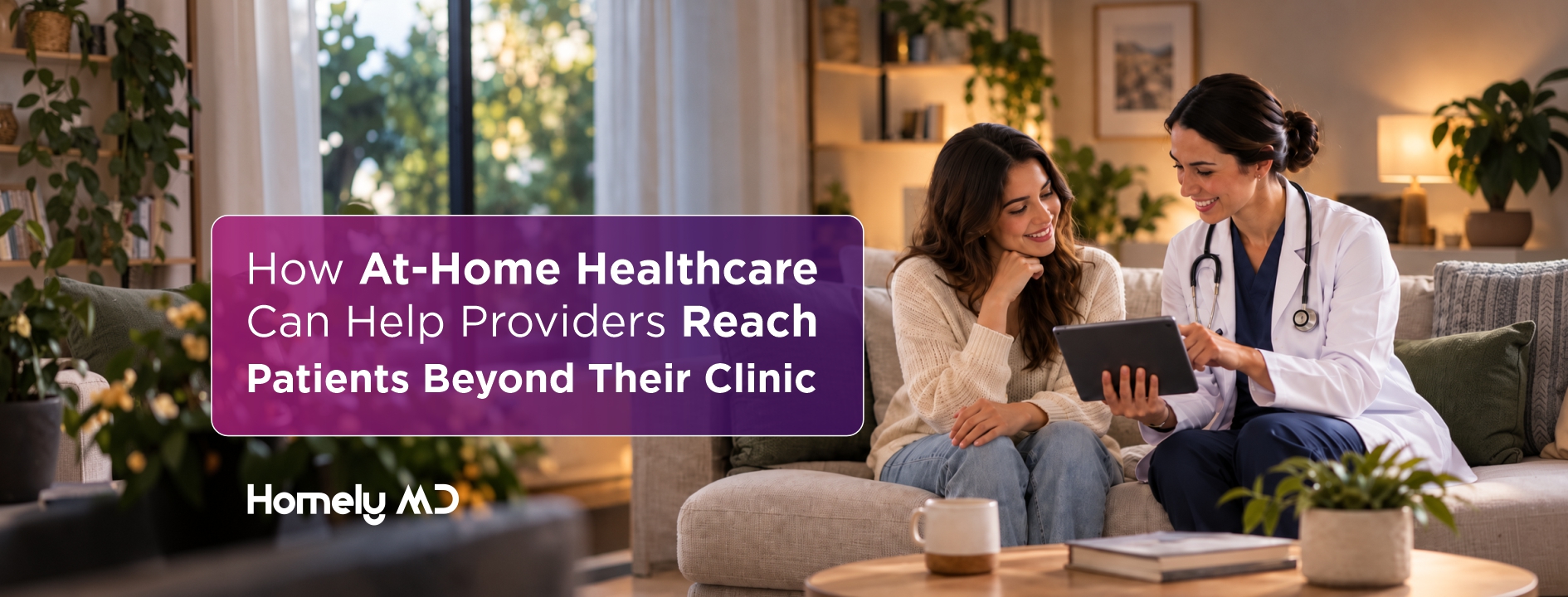
More providers are bringing care directly to patients through at-home healthcare services, making healthcare more convenient, accessible, and personal than ever before.
And it’s not just patients who are embracing the change. Healthcare providers are discovering that delivering care outside the traditional clinic can also create stronger relationships and a better overall experience.
Healthcare is coming to people instead of asking people to come to healthcare..
Think about how many everyday services have changed over the last decade.
We stream movies instead of visiting video stores.
We order groceries instead of making an extra trip.
We work from home more than ever before.
Healthcare is evolving in a similar way.
For many appointments, patients don’t necessarily need to travel to receive quality care.
Sometimes, the best place to deliver care is exactly where the patient already is.
The shift is bigger than convenience
According to McKinsey & Company, up to $265 billion worth of healthcare services that are currently delivered in traditional facilities could eventually shift to the home, reflecting growing demand for more accessible and patient-centered models of care. This trend is accelerating as providers and patients look for more flexible ways to deliver healthcare without compromising quality.
That’s because home-based care isn’t simply about saving a trip.
It can also reduce unnecessary travel, improve continuity of care, and make it easier for patients to stay engaged with their treatment plans.
Patients aren’t the only ones benefiting
When people hear about mobile healthcare services, they often think about patient convenience.
But providers see benefits too.
They can reach patients who may otherwise delay care.
They can offer more personalized visits.
They often gain a better understanding of a patient’s daily environment, something that isn’t always possible inside a clinic.
Sometimes, seeing how a patient actually lives can provide valuable context that helps shape better care decisions.
Is at-home care right for every visit?
Not always.
Emergency care, surgery, and many specialized procedures still require hospitals or clinical settings.
But many other services can be delivered safely outside traditional facilities.
These include:
- Wellness visits
- Chronic disease management
- Preventive health assessments
- Follow-up appointments
- Hormone therapy monitoring
- IV therapy
- Weight management support
- Laboratory sample collection
- Recovery and wellness services
As healthcare continues evolving, providers are increasingly blending in-clinic care with home wellness services to give patients greater flexibility.
Here’s a quick checklist
Patients often appreciate at-home care if they:
✔ Have busy work schedules.
✔ Prefer recovering in familiar surroundings.
✔ Have limited mobility.
✔ Live far from a clinic.
✔ Want ongoing wellness support without frequent travel.
Providers often benefit when they want to:
✔ Expand services without opening another location.
✔ Improve patient retention.
✔ Offer a more personalized care experience.
✔ Reach patients who value convenience.
Healthcare feels different when it’s personal..
Most people feel more comfortable at home.
They’re less rushed.
Less anxious.
More likely to ask questions.
That changes the conversation.
Instead of feeling like another appointment on the calendar, healthcare becomes a more relaxed and collaborative experience.
For many providers, that’s one of the biggest advantages of at-home healthcare services.
Technology is making home-based care easier than ever
Ten years ago, delivering care outside a clinic was far more complicated.
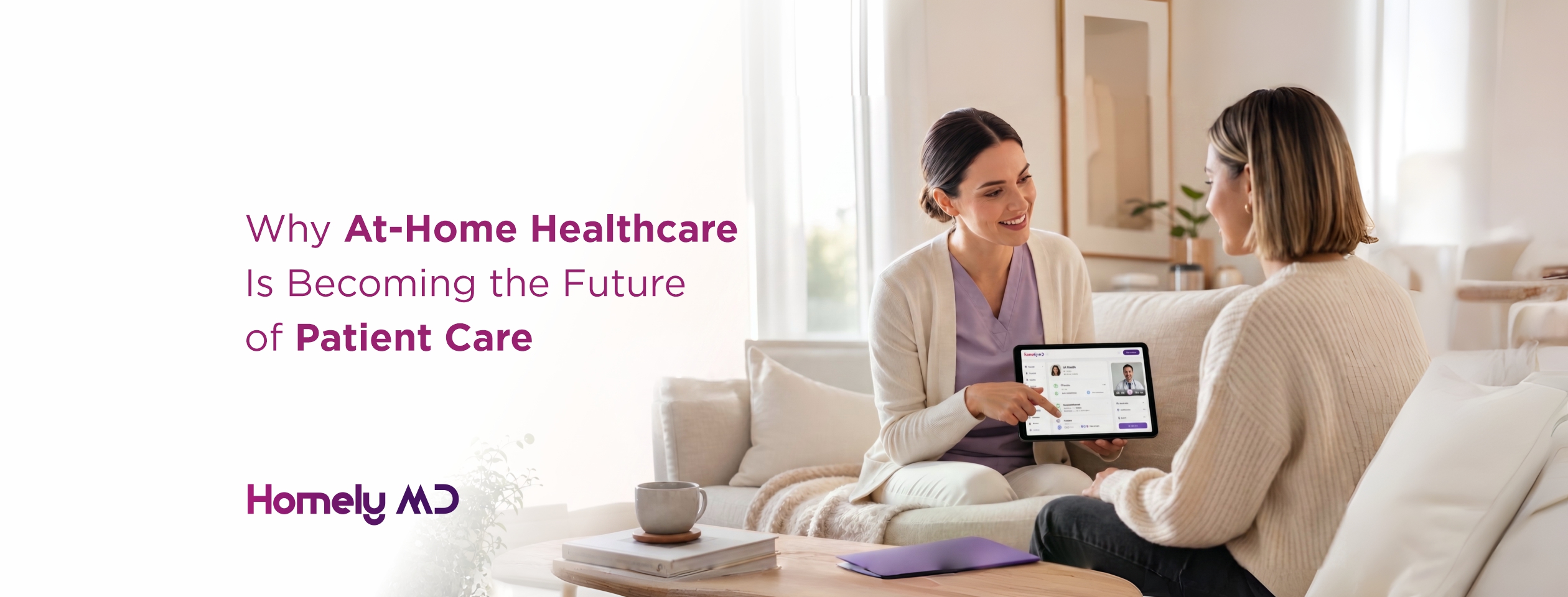
Today, providers can manage scheduling, patient records, virtual follow-ups, documentation, communication, and care plans through connected digital platforms.
Technology has made mobile healthcare services more practical, allowing providers to stay connected with patients whether care happens in a clinic, virtually, or at home.
Why Homely MD believes care should meet patients where they are
Healthcare isn’t one-size-fits-all anymore.
Some patients prefer visiting a clinic.
Others value virtual consultations.
Many appreciate receiving care in the comfort of their own home.
At Homely MD, our home wellness services are designed to give providers the flexibility to deliver care where it makes the most sense for each patient… Combined with connected technology and operational support, providers can expand beyond traditional clinic walls while maintaining continuity of care and a seamless patient experience.
The future of healthcare is more flexible
The goal isn’t to replace clinics.
It’s to give patients more choices.
Healthcare works best when it fits into people’s lives instead of asking people to rearrange their lives around healthcare.
For many providers, that’s exactly why at-home healthcare services are becoming an important part of modern care delivery.
As patient expectations continue to evolve, the practices that embrace flexibility today will be better positioned to care for the patients of tomorrow.
Discover how Homely MD helps providers expand through mobile healthcare services and home wellness services, making it easier to deliver connected care wherever patients need it most.
Get in touch!
FAQs
What are at-home healthcare services?
They allow qualified healthcare providers to deliver certain medical and wellness services directly in a patient’s home instead of requiring a clinic visit…
Are home wellness services only for older adults?
No…People of all ages use home wellness services for preventive care, chronic condition management, wellness treatments, and follow-up visits.
What types of care can be provided at home?
Depending on the provider, services may include wellness visits, chronic care management, lab collection, hormone therapy support, IV therapy, and follow-up care.
Why are more providers offering mobile healthcare services?
They help improve accessibility.. create a more convenient patient experience, and allow providers to reach more people without relying solely on traditional clinic visits.
How does Homely MD support at-home care?
Homely MD helps healthcare providers deliver connected care through at-home healthcare services, supported by technology, operational infrastructure, and tools that make managing home visits simpler and more efficient.