Your calendar is full.
There are meetings you can’t move, deadlines you can’t miss, emails that somehow keep multiplying, and then there is that doctor’s appointment sitting in the middle of everything.
It’s not that you don’t want to take care of your health.
It’s that healthcare can be surprisingly difficult to fit into a busy schedule.
A doctor’s appointment can mean driving across town, finding parking, sitting in a waiting room, and spending much more time away from work than the actual consultation takes.
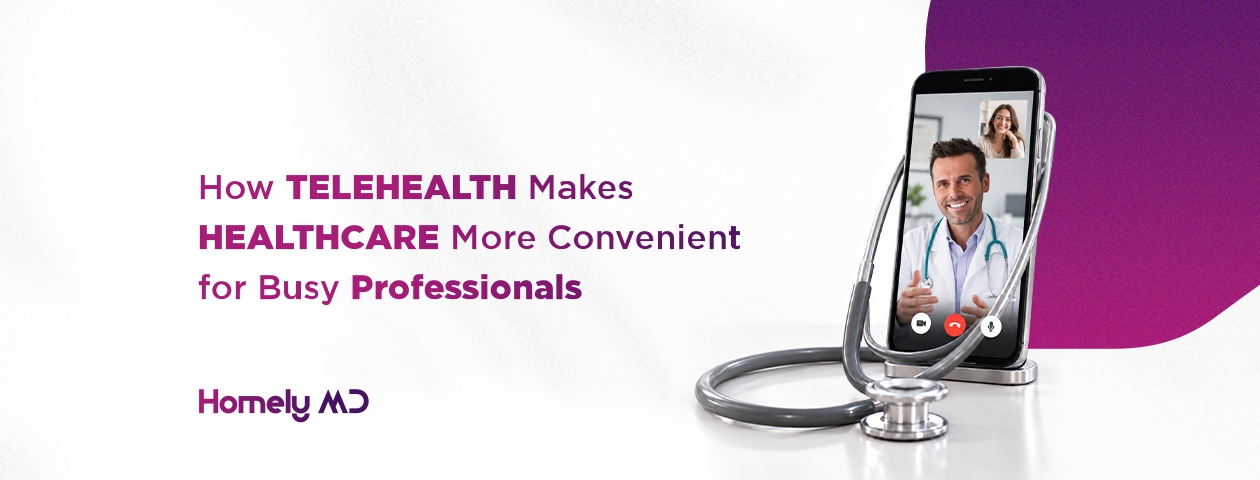
This is where telehealth services can make a practical difference.
Healthcare Doesn’t Always Need to Happen in a Waiting Room
There are appointments where being physically present matters. A physical examination, procedure, imaging, or hands-on treatment obviously can’t always happen through a screen.
But not every appointment requires that.
A follow-up. A discussion about test results. A medication review. A conversation about an ongoing concern.
For appropriate situations, these can often happen remotely.
The American Medical Association notes that telehealth can reduce the burden of travel, support more timely access to care, and improve communication between patients and healthcare professionals. (American Medical Association)
That matters when your biggest barrier isn’t willingness to see a doctor. It’s finding the time to get there.
You Can Have a Consultation Without Losing Half Your Day
Think about what a traditional appointment can involve.
You leave work.
You drive to the clinic.
You find parking.
You wait.
You have the appointment.
Then you drive back.
A 20-minute conversation can easily become a much larger interruption to your day.
With virtual healthcare, some appropriate appointments can happen from home, your office, or another private location.
You still need to set aside time for the consultation. But you remove much of the travel and waiting around it.
A systematic review of patient experiences with virtual care found that patients frequently reported greater convenience, including saving travel time and cost and experiencing less waiting. (PubMed)
It Can Make Follow-Ups Easier
Follow-up care is one area where convenience really matters.
Maybe your doctor wants to know whether a treatment is working.
Maybe your lab results are ready.
Maybe you have questions about medication.
Maybe you simply need to check in before continuing your care plan.
When an in-person examination isn’t necessary, telehealth services can give you a way to have that conversation without making another trip to the clinic.
And when follow-ups are easier to attend, staying connected with your provider becomes less disruptive to everyday life.
You Don’t Have to Wait Until Something Feels Urgent
Busy professionals are often good at postponing healthcare.
The appointment gets pushed to next week.
Then next month.
Then eventually, you realize you haven’t followed up at all.
Convenient healthcare doesn’t solve every reason people delay care, but reducing unnecessary logistical barriers can make it easier to actually schedule and attend appropriate appointments.
That’s one of the practical strengths of virtual healthcare.
It brings part of the healthcare experience closer to where people already are.
Telehealth Is Not Just for One Type of Patient
It’s easy to think of telehealth as something designed for people who can’t get to a clinic.
But it can also be useful for people who technically can get there but have difficulty fitting another trip into their lives.
Parents with packed schedules.
Professionals travelling frequently.
People managing ongoing conditions.
Someone who works long hours.
Someone who lives far from their provider.
The common thread isn’t necessarily the health condition.
It’s access.
But Convenience Shouldn’t Come at the Expense of Good Care
This is important.
Telehealth isn’t automatically the better option just because it’s easier.
Some situations require an in-person assessment. Your provider should determine whether your particular concern can be safely addressed through a virtual appointment.
The goal isn’t to turn every healthcare interaction into a video call.
It’s to use telehealth services when remote care is clinically appropriate and genuinely makes the experience easier.
The Technology Behind Virtual Care Matters Too
For a patient, telehealth can look as simple as clicking a link and talking to a doctor.
For a healthcare practice, there is much more happening behind the scenes.
Scheduling.
Patient records.
Documentation.
Billing.
Prescriptions.
Follow-ups.
Patient communication.
When all of these functions live in disconnected systems, the convenience of the video consultation can quickly disappear for the provider.
A well-integrated virtual healthcare platform connects these pieces so the consultation becomes part of the broader care workflow rather than another standalone tool.
How Homely MD Makes Virtual Care More Connected
Homely MD brings telehealth into a broader healthcare operating system.
Providers can manage telehealth services alongside their EHR, scheduling, documentation, patient communication, billing, and other practice workflows.
That means the virtual appointment doesn’t have to exist in a silo.
A patient schedules an appointment.
The provider can access the relevant information.
The consultation happens virtually.
The visit is documented.
The next step can be arranged.
It’s a much more connected approach to convenient healthcare.
Because for a busy professional, convenience isn’t about making healthcare effortless.
It’s about removing the unnecessary parts that make getting care harder than it needs to be.
Get in touch!
FAQs
1. Is telehealth suitable for busy professionals?
It can be particularly convenient for appointments that don’t require a physical examination, such as certain follow-ups, consultations, and treatment discussions.
2. What can I use telehealth services for?
Depending on the provider and type of care, telehealth may be used for consultations, follow-ups, medication management, reviewing results, and managing certain ongoing conditions.
3. Can I have a virtual healthcare appointment from work?
You can, provided you have a private and appropriate environment where you can speak with your provider confidentially.
4. Does telehealth replace in-person healthcare?
No. Some healthcare needs require physical examinations, procedures, testing, or hands-on treatment. Your provider can determine which type of appointment is appropriate.
5. How does Homely MD support telehealth?
Homely MD connects telehealth with broader healthcare workflows, including EHR, scheduling, documentation, billing, and patient communication, giving providers a more integrated way to manage virtual care.