Healthcare became faster.
Appointments can happen virtually.
Reports arrive digitally.
Support is available through apps, platforms, and telehealth systems.
But something else happened too.
Patients became less patient.
Not in a negative way.
People simply expect more now.
More communication.
More convenience.
More transparency.
More personalised healthcare.
And honestly, if healthcare businesses miss that shift, patients notice immediately.
Because today, people are not only comparing healthcare experiences to other healthcare providers.
They are comparing them to every smooth digital experience they already have in daily life.
What Client-Centered Care Actually Means Today
A lot of people hear the phrase client-centered care and assume it is just about being polite.
It is much bigger than that.
Client-centered care means building healthcare around the person receiving it instead of forcing them to adapt around complicated systems.
That includes:
- communication
- accessibility
- flexibility
- personalised healthcare experiences
- understanding individual needs
Simple version?
People want to feel like someone actually understands their situation instead of pushing them through a process.
The Problem With Digital-First Healthcare
Digital healthcare solved many problems.
But it accidentally created new ones too.
Some patients now feel like healthcare became:
- rushed
- transactional
- overly automated
- difficult to navigate
You can book faster.
But sometimes the experience feels less personal.
And that is exactly where many healthcare brands struggle.
Technology improved access.
It did not automatically improve connection.
Patients Want Convenience — But They Also Want Reassurance
This is where things start changing.
People love virtual healthcare services because they save time.
Nobody misses:
- traffic
- crowded waiting rooms
- long appointment delays
But convenience alone does not create loyalty.
Patients still want reassurance.
They want to feel:
- heard
- understood
- remembered
- supported
Especially when discussing health concerns.
Healthcare is personal.
People do not want to feel like a ticket number.
Personalised Healthcare Is Becoming an Expectation
A few years ago, personalised healthcare felt like a premium feature.
Now it feels expected.
According to the 2024 HealthEdge Consumer Survey, patients increasingly expect healthcare experiences to be more personalised, proactive, and digitally connected as consumer expectations continue evolving.
People want providers who understand:
- their history
- their preferences
- their concerns
- their lifestyle
Not generic healthcare experiences that feel identical for everyone.
Why Communication Became More Important Than Ever
A lot of healthcare businesses focus heavily on technology.
Patients focus on communication.
Those are not always the same thing.
For example:
A patient may forgive a delayed appointment.
But they rarely forgive feeling ignored.
Especially in virtual healthcare services.
Things like:
- follow-up messages
- appointment reminders
- clear instructions
- provider accessibility
build trust much faster than fancy platforms do.
Most People Want Simpler Healthcare
Honestly, healthcare became complicated.
Too many portals.
Too many forms.
Too many disconnected systems.
Patients are tired of repeating the same information everywhere.
This is one reason all-in-one healthcare models are growing.
People want fewer steps between needing care and actually receiving it.
The easier the process feels, the more likely patients are to stay engaged.
What Patients Remember Most
This part surprises many healthcare businesses.
Patients often do not remember every medical detail.
They remember how the experience felt.
Did someone explain things properly?
Did they feel rushed?
Did they have to chase updates constantly?
Did the provider actually listen?
Those moments shape trust far more than people realise.
Digital-First Healthcare Still Needs Human Energy
One mistake many healthcare companies make is sounding too clinical online.
Patients are already anxious.
Already overwhelmed.
Already searching symptoms at 2 a.m.
They do not need more robotic communication.
They need clarity.
They need warmth.
They need healthcare experiences that still feel human even when delivered digitally.
That balance matters.
Why Younger Patients Expect More
Younger generations grew up with personalised digital experiences everywhere.
Streaming platforms recommend content.
Shopping apps remember preferences.
Services feel customised automatically.
Naturally, they expect healthcare to evolve too.
According to McKinsey’s 2024 Consumer Health Insights Survey, younger consumers are significantly more likely to switch providers and actively seek healthcare experiences that feel more accessible, connected, and responsive.
That means healthcare providers can no longer rely only on reputation.
Experience matters too.
What Great Client-Centered Care Looks Like Today
It is usually not flashy.
It looks like:
- easy access
- clear communication
- personalised healthcare support
- smooth follow-ups
- reliable Virtual Care experiences
- providers who genuinely listen
Most patients are not asking for perfection.
They are asking for healthcare that feels easier to trust.
The Future of Healthcare Is Not Just Digital
This is important.
The future is not simply more technology.
It is better experiences.
Technology is only useful when it helps people feel:
- supported
- informed
- connected
- confident about their care
The healthcare companies growing fastest understand that difference.
Making Digital Healthcare More Human
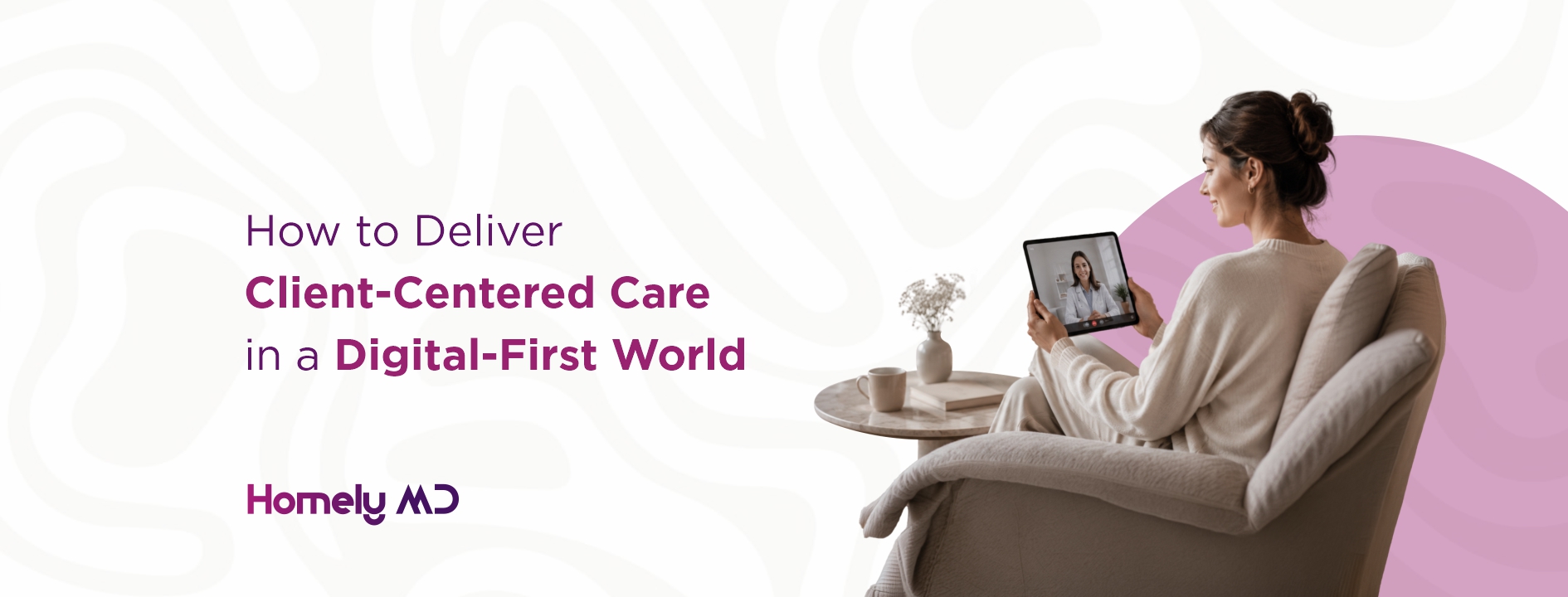
Delivering client-centered care in a digital-first world is not really about having the most advanced platform.
It is about making personalised healthcare feel accessible, responsive, and genuinely human.
As virtual healthcare services continue growing, patients will keep expecting more than convenience alone.
They want communication.
They want trust.
They want care that feels designed around real life.
At Homely MD, healthcare is built around client-centered care, personalised healthcare experiences, and virtual healthcare services designed to fit naturally into modern lifestyles.
Get in touch with Homely MD to explore healthcare solutions built around people, not just systems.
FAQs
1. What does client-centered care actually mean?
It means healthcare is designed around the patient’s needs, lifestyle, preferences, and experience instead of forcing everyone through the same process.
2. Why is personalised healthcare becoming more important now?
Because patients expect healthcare to feel more relevant, connected, and tailored to their situation rather than generic.
3. Do patients really prefer virtual healthcare services?
A lot do, especially when the experience feels easy, responsive, and still personal.
4. What is the biggest mistake digital healthcare companies make?
Usually focusing too much on technology and not enough on communication and patient experience.
5. How do healthcare providers build trust online?
Mostly through consistency, transparency, good communication, and making patients feel genuinely supported.