Healthcare is quietly shifting, and if you’re paying attention, you can feel it.
Clients are no longer asking, “Where is the nearest clinic?”
They’re asking, “Can this be done at home?”
That change is not random. It’s coming from how people now think about time, comfort, and control.
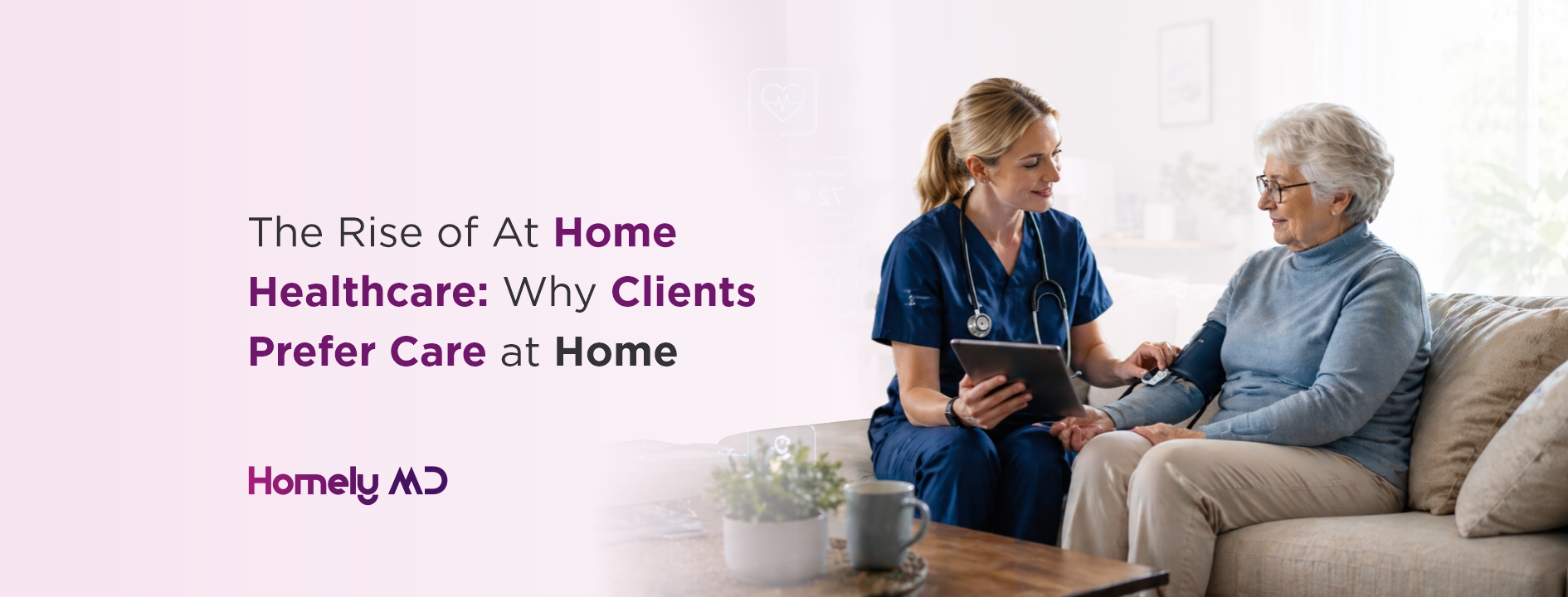
And this is exactly where an at-home healthcare platform is starting to redefine how care is delivered.
Clients don’t want to adjust their lives for healthcare anymore
Think about the traditional experience.
- Appointments that don’t fit your schedule
- Waiting rooms that take longer than expected
- Travel time that adds unnecessary friction
For a lot of people, the actual treatment is not the problem. The process around it is.
This is why at-home care is becoming the preferred choice. It removes everything that feels inconvenient and keeps only what matters.
Care becomes something that fits into your day, not something that disrupts it.
Comfort is not a luxury, it’s becoming an expectation
There’s a big difference between receiving care in a clinic and receiving it at home.
At home, people are more relaxed.
They ask better questions.
They are more open about what they need.
This changes the entire experience, not just emotionally but also in terms of outcomes.
The demand is no longer limited to specific cases
Earlier, at home medical care was mostly associated with elderly patients or those with mobility challenges.
That’s no longer true.
Now you’re seeing demand from:
- Busy professionals who cannot afford to waste hours in transit
- Individuals who prefer privacy for aesthetic or wellness treatments
- Clients who want ongoing care without repeated clinic visits
This is not a niche anymore. This is becoming a standard expectation.
The real reason clients are choosing at-home care
If you strip it down, it comes to three things.
1. Time efficiency
People are done spending half a day on something that should take an hour.
With an at-home healthcare platform, the entire process becomes streamlined. No travel. No waiting. Just direct care.
2. Privacy
This matters more than most people admit.
For many treatments, especially in wellness and aesthetics, clients don’t want to sit in a clinic or be seen walking into one.
At-home care removes that friction completely.
3. Control
At home, clients feel in control.
They choose the timing.
They choose the environment.
They are not being rushed.
That sense of control is a big reason why satisfaction levels are higher.
Technology is making this shift stronger
This shift is not just behavioral. It’s also backed by technology.
Telehealth, remote monitoring, and digital coordination are making it easier to deliver high-quality at home medical care without compromising standards.
Many research shows that home healthcare combined with telehealth improves access, reduces hospital visits, and increases patient satisfaction while lowering costs.
For providers, this means one thing.
The demand is not temporary. It is structural.
What this means for providers
This is where it gets interesting.
Because while clients are clearly moving towards at-home care, many providers are still operating in traditional models.
That creates a gap.
And gaps like this usually turn into opportunities.
More demand, but not enough flexible supply
Clients are ready for at-home services.
But not every provider has the infrastructure to deliver it efficiently.
This is where an at-home healthcare platform becomes critical.
It allows providers to:
- Offer services beyond a fixed clinic location
- Reach more clients without increasing physical overhead
- Operate more flexibly
Better client experience leads to better retention
When clients feel comfortable, they come back.
When they come back, your practice becomes more predictable.
And when your practice becomes predictable, it becomes scalable.
That’s the real shift here. It’s not just about offering a new service. It’s about improving how your entire practice operates.
You’re no longer limited by geography
With traditional setups, your reach is limited to your clinic location.
With at home medical care, your reach expands.
You are not waiting for clients to come to you. You are meeting them where they are.
That changes how you grow.
Why this shift is accelerating right now
There are a few reasons why this isn’t just a slow trend.
It’s picking up pace.
- People have experienced convenience in every other part of life
- Healthcare is catching up
- Technology has made remote care reliable
- Expectations have permanently changed
Once people experience at-home care, going back to traditional systems feels like a step backward.
Where Homely MD fits into this
This is exactly the space Homely MD is building in.
Not just offering services, but enabling providers to step into this new model without friction.
Instead of figuring everything on your own, you get access to:
- A structured system for delivering at-home care
- Access to clients already looking for these services
- A way to expand your practice without increasing complexity
This is not about replacing traditional care. It’s about extending it in a way that matches what clients now expect.
The Future of Healthcare Delivery
This shift is not about whether at-home care will grow.
It already is.
The real question is whether you are positioned to benefit from it.
Clients are choosing convenience, privacy, and control.
And at-home healthcare platforms are making that possible at scale.
If your practice is not aligned with that yet, this is the moment to start thinking about it, and you’re looking to expand your practice and tap into this growing demand, get in touch today!
FAQs
1. What is an at-home healthcare platform?
It’s a system that allows providers to deliver medical services directly at a client’s home instead of a clinic.
2. Why are clients choosing at-home care more now?
Honestly, it just fits better into their lives. No travel, no waiting, and they feel more comfortable being treated in their own space.
3. Is at home medical care as effective as clinic care?
In most cases, yes. Mostly for consultations, follow-ups, and many treatments, the quality of care stays the same when done properly.
4. How does at-home care help providers?
It opens up more flexibility. You’re not limited to one location, and you can reach clients who may not visit a clinic otherwise.
5. Is this trend expected to continue?
It already is. Once people get used to this level of convenience, they usually don’t want to go back to the old way.